Outrank and Arvow Alternatives for Git-Based Blogs (2026)
Looking for an Outrank or Arvow alternative because your blog is MDX in a GitHub repo? Four options, a webhook-to-commit pattern, and how to move existing articles without losing traffic.
Outrank and Arvow do the same basic job: find keywords, write articles, and publish them on a schedule.
Both are built around hosted CMSs. WordPress, Webflow, Shopify, Wix, Ghost, Framer. If that is where your blog lives, they fit.
But a lot of SaaS founders don't have a CMS. They have a Next.js or Astro site, a content/blog folder full of MDX files, and a deploy that runs on every push.
For that setup, the question is not which tool writes better. It is where your posts end up.
What Outrank and Arvow do with a Git-based blog
Outrank
Researched, not tested.
Outrank costs $99/mo for 30 articles a month and publishes them on autopilot. It also sells backlinks, and with Search Console connected it can re-optimize articles it already published.
For a Next.js site, Outrank offers an npm package that your site uses to fetch articles from Outrank's API, plus a starter repo on GitHub. The articles live on Outrank's side. Your site pulls them in. It also has a webhook and a REST API.
We found no integration that commits articles into your repo as files, and no mention of Astro.
Arvow
Researched, not tested.
Arvow writes and auto-publishes through AutoBlog, and adds backlinks and AI search visibility tracking on its higher plans.
Solo is $69/mo ($39/mo billed yearly) for one website. Business is $169/mo ($69/mo billed yearly) and adds automatic backlinks, AI brand visibility, five websites, and webhooks.
Arvow's webhook sends each article as both HTML and Markdown, and its docs name Next.js and Nuxt as examples of custom sites that can receive it. We found no GitHub integration and no mention of Astro.
What a Git-based blog actually needs
Before comparing alternatives, it helps to write down what "works with my blog" means when the blog is code.
- Posts are files in the repo. Same place as the rest of the site, versioned, searchable, yours.
- Changes are reviewable. A diff, or a branch you merge, like any other change.
- No new runtime dependency. The blog should build and serve without calling a vendor's API.
- Output fits your site. Frontmatter fields, MDX components, and image paths that match what your build expects, so the deploy does not break.
- Updates come back to the same file. When a page slips, the fix should be a change to that file, not a second copy somewhere else.
Neither Outrank nor Arvow was designed around that list. That is not a flaw. It is a different target customer.
Four alternatives for a blog in a repo
1. NichePressa: commits MDX to your repo
Ours.
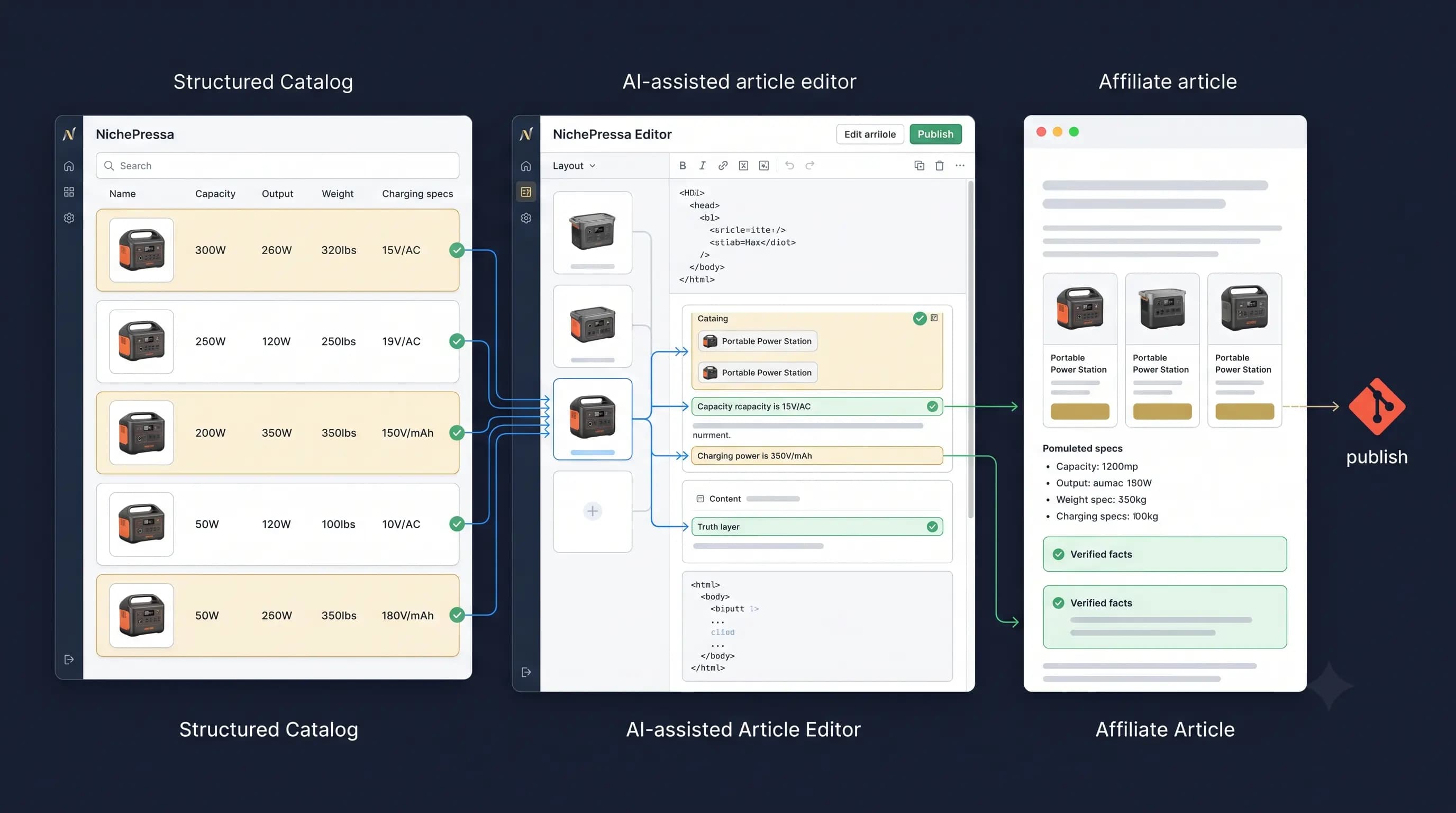
NichePressa is built for this case. It writes articles in your voice, learned from your own posts, and commits each one as an MDX file to your GitHub repo, on main or on a review branch you merge yourself.
A weekly review reads your Search Console and GA4 data to decide what to write next and to propose updates for pages that are slipping. Updates are commits to the same file. Product facts such as prices and specs come from your own catalog when the article publishes.
Starter is $39/mo for 10 articles, and you can try it with 2 articles free, no card.
Not a fit if you want backlinks, or your blog is on WordPress, Webflow, Shopify, or Wix. Automatic setup also expects MDX.
2. SEObot: a cheaper pull-from-API option
Researched, not tested.
If the pull-from-API model is fine for you and the price is the problem, SEObot works the same way for Next.js: an npm package fetches articles from SEObot, with an example repo on GitHub.
Plans start at $49/mo, which its help center lists as 9 articles a month. Auto-publish is a toggle, so you can keep new articles as drafts until you approve them.
Good fit if you are happy with the Outrank-style setup and want a lower entry price.
3. Frase: autopilot that starts in review
Researched, not tested.
Frase's agent researches, writes, optimizes, and publishes. Every content type starts in review, and you switch it to auto-publish only when you trust it. It watches your Search Console positions and clicks.
Starter is $49/mo ($39/mo yearly) for 10 articles, with a 7-day free trial and no card. It publishes to WordPress, Webflow, Sanity, Wix, its own hosted CMS, and a REST API with webhooks. We found no GitHub publishing integration.
Good fit if your blog can live in a headless CMS like Sanity, or you are willing to connect its API yourself.
4. Build it yourself: webhook to commit
If you like one of these tools and only the delivery is wrong, you can close the gap yourself.
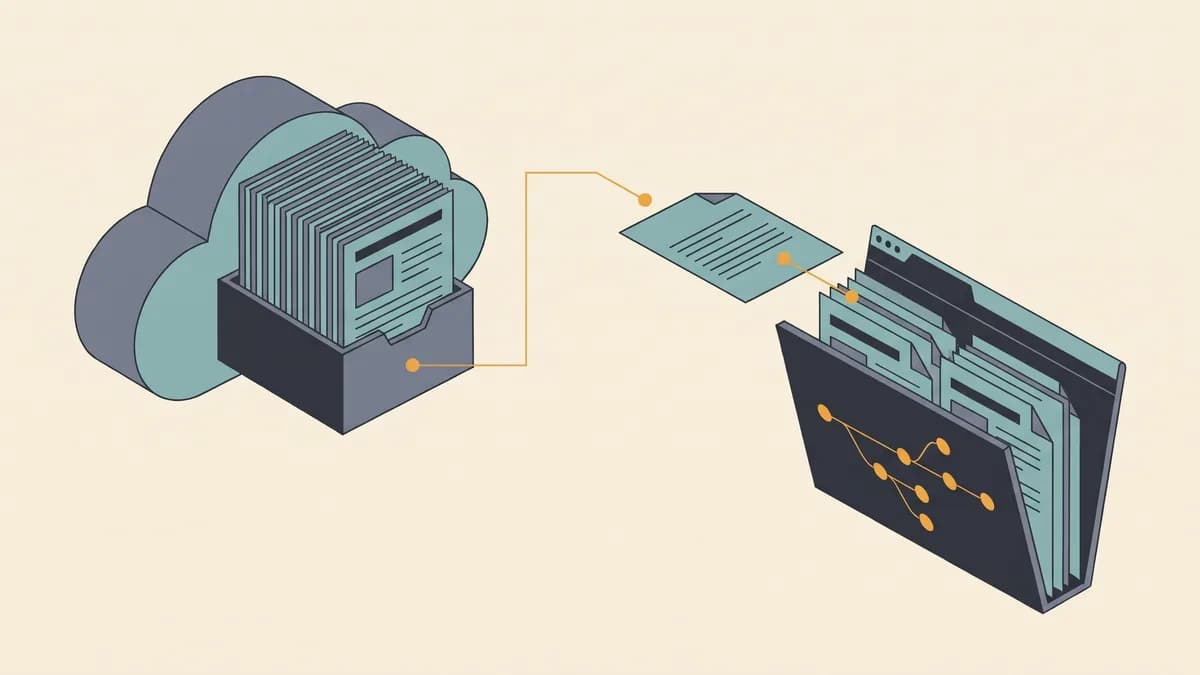
Arvow (on Business) and Outrank both send articles to a webhook. A small serverless function can receive that webhook and commit the article to your repo:
- The tool sends a new article to your webhook URL.
- Your function takes the Markdown (Arvow sends it directly) or converts the HTML.
- It adds the frontmatter your blog expects: title, description, date, cover, tags.
- It commits the file to a review branch through the GitHub API, or opens a pull request.
- You review the diff and merge. Your normal deploy publishes it.
This is a pattern, not a product, and we have not built it against either tool. Expect to handle images, MDX components the tool doesn't know about, and updates to articles that already exist. But it keeps the writing tool you like and gets the files into Git.
Side by side
| Outrank | Arvow | NichePressa | SEObot | Frase | |
|---|---|---|---|---|---|
| Entry price (monthly) | $99, 30 articles | $69, 1 website | $39, 10 articles | $49, 9 articles | $49, 10 articles |
| Free option | Trial (watermarked) | None mentioned | 2 articles, no card | Refund on the $49 plan | 7-day trial |
| Where posts live | Outrank's service | Your CMS, or your webhook | MDX files in your repo | SEObot's service | Your CMS, or its own |
| Next.js | npm package pulls from API | Webhook (HTML + Markdown) | Commits MDX | npm package pulls from API | Via API, not named |
| Astro | Not mentioned | Not mentioned | Commits MDX | Not mentioned | Not mentioned |
| Review before publish | Optional preview | Not confirmed | Review branch or manual review | Auto-publish toggle | Starts in review |
| Backlinks | Yes, separate plans | Business and up | No | Yes | Not mentioned |
Moving existing articles into your repo
If you already published through Outrank or a similar pull-from-API setup, your traffic is attached to those URLs. Switching tools should not throw that away.
1. Save every article as a file first. Before you cancel, get each article out as Markdown or HTML. If your site already fetches Markdown through the vendor's package, a one-time script can loop over the articles and write each one to content/blog. Check the vendor's export options and terms too.
2. Keep the same URLs. Use the same slug for each file so /blog/your-post stays /blog/your-post. If a URL has to change, add a permanent (301) redirect from the old one.
3. Keep the content the same at first. Move the articles as they are. Change one thing at a time, so if traffic moves you know why.
4. Check the canonical tags. Each page's canonical should point to itself on your domain, not to the vendor's host or an old preview URL.
5. Remove the runtime fetch last. Once every page builds from files, remove the vendor's package and API key, then deploy.
6. Resubmit your sitemap and watch Search Console. Compare the next 28 days with the previous 28. Our guide to finding and fixing content decay shows how to read that comparison.
How to choose
- You want posts as files in Git, reviewed like code: NichePressa, or the webhook-to-commit pattern if you want to keep Outrank or Arvow.
- You are fine with a pull-from-API setup and want a lower price: SEObot.
- You want autopilot but approve every draft at first, and can use a headless CMS: Frase.
- You want maximum volume and backlinks, and the delivery model doesn't bother you: stay with Outrank or Arvow.
For the wider field, including research tools like Ahrefs and Semrush and optimizers like Surfer and Clearscope, see our comparison of the best AI SEO tools for SaaS founders.
Frequently asked questions
What is a good Outrank alternative?
It depends on why you are leaving. For a lower price with the same pull-from-API model, SEObot starts at $49/mo. For autopilot that starts in review, Frase. For a blog that lives in a Git repo, NichePressa commits MDX files to your repo, which we make.
Can Outrank publish to GitHub?
Not as files, based on its integrations page in November 2026. For Next.js, Outrank provides an npm package that fetches articles from its API, and a starter repo on GitHub. It also has a webhook and REST API, which you could use to commit articles yourself.
Is there an Arvow alternative for Next.js?
Arvow itself can send articles to a Next.js site through its webhook, which includes Markdown. If you want articles committed to your repo instead, NichePressa does that, or you can build a small webhook-to-commit function.
Can I move my Outrank articles into my repo?
Yes, if you save them before you cancel. Write each article to a Markdown or MDX file with the same slug, keep the URLs unchanged, check canonical tags, and only then remove the API fetch from your site.
What is cheaper than Outrank?
Of the tools we looked at, NichePressa Starter is $39/mo for 10 articles, SEObot starts at $49/mo for 9, Frase Starter is $49/mo for 10, and Arvow Solo is $69/mo. Outrank includes more articles (30) for its $99, so compare the price per article you would actually publish.
NichePressa writes in your voice and commits MDX to your repo. Create two articles free.