Why Generic AI Writers Are Killing Your Niche Site (And How We're Fixing It)
Most AI writing tools start from a blank prompt and hallucinate the details, resulting in fluffy, generic content. Discover how catalog-driven publishing anchors your articles in real products, tools, and services.
You already know the sound of a standard AI article.
"In the fast-paced world of torque wrenches, choosing the right tool can make all the difference..."
Or:
"Whether you're a beginner or a seasoned professional, finding the best project management software is essential..."
Or worse:
"In today's digital landscape, niche websites must provide value to their audience..."
It sounds correct.
It sounds clean.
It sounds like content.
But it says almost nothing.
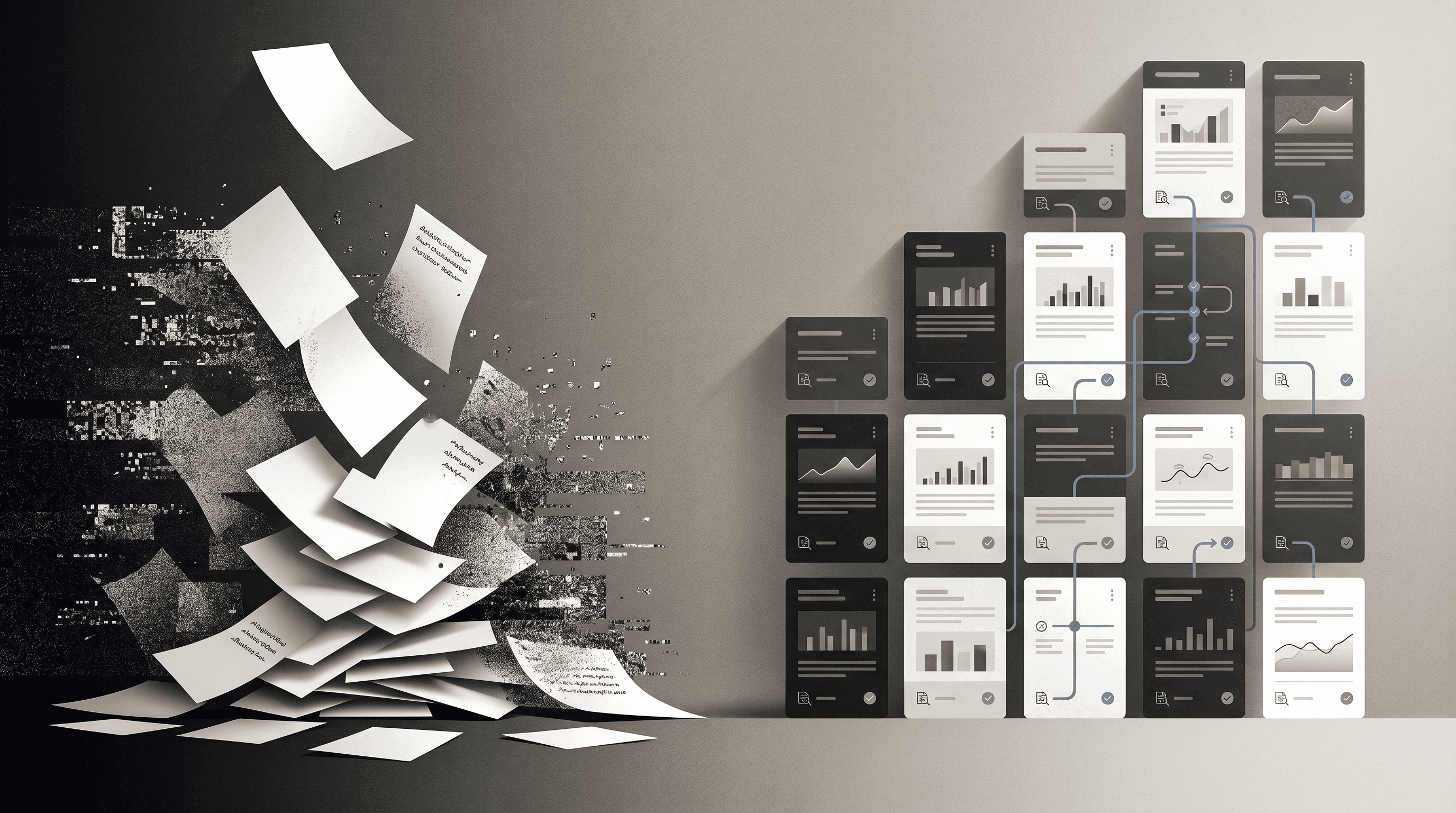
That is the problem with most AI writing tools today. They can produce words quickly, but the words are often floating in the air. No real source. No real product knowledge. No real editorial judgment. No real reason for the article to exist.
For a niche site, that is dangerous.
Because niche publishing is not just about writing "articles."
It is about building trust around a specific topic.
And generic AI content slowly kills that trust.
The Problem With Blank-Prompt AI Writing
Most AI writers start from the same place:
A blank prompt.
You give the tool a topic like:
Write an article about the best tools for remote teams.
Or:
Write a guide to the best tower defense games.
Or:
Create a buying guide for camping chairs.
Then the AI fills in the gaps.
That sounds useful at first. But here is the problem:
The AI does not actually know your site.
It does not know your editorial angle.
It does not know which products, games, tools, services, or resources you actually recommend.
It does not know what you already published.
It does not know what your readers care about.
So it guesses.
And when AI guesses, the result is usually content that looks fine from a distance but feels empty when you read it closely.
Generic AI Content Has a Pattern
Bad AI content usually has the same shape.
It opens with a vague introduction.
It lists obvious points.
It uses safe language.
It avoids specific opinions.
It adds filler like:
- "It depends on your needs"
- "There are many options available"
- "Make sure to do your research"
- "This tool can help improve productivity"
- "Choosing the right option is important"
None of these sentences are technically wrong.
That is what makes the problem tricky.
The issue is not that the article is broken.
The issue is that it is forgettable.
And forgettable content is a slow death for a niche site.
Niche Sites Need Specificity
A good niche site does not win because it publishes the most words.
It wins because it feels like someone actually understands the topic.
For example, if you run a gaming site, your readers do not just want:
10 Best Strategy Games to Play This Year
They want to know:
- Which games are actually good for beginners?
- Which ones are deep but not overwhelming?
- Which games feel like Balatro, Slay the Spire, or Factorio?
- Which ones are worth buying during a sale?
- Which ones look good but get boring after two hours?
That requires judgment.
The same is true for product sites, software sites, tool directories, hobby blogs, affiliate sites, and any other niche publication.
Your content needs to be connected to real things.
Real products.
Real tools.
Real games.
Real services.
Real pros and cons.
Real comparisons.
Not just "content around a keyword."
This Is Why We Built NichePressa Around Catalogs
NichePressa is not just another AI writer.
The goal is not:
Enter keyword -> generate article
That flow is too weak.
Instead, NichePressa is built around a different idea:
Build a real catalog -> generate content from that catalog
That catalog can include things like:
- Products
- Games
- Tools
- Apps
- Services
- Websites
- Resources
- Competitors
- Internal recommendations
- Affiliate items
- Reviewed items
- Approved sources
The catalog becomes the foundation.
The AI is not writing from nothing.
It is writing from a structured set of things your site actually knows about.
That changes everything.
What Catalog-Driven Publishing Means
Catalog-driven publishing means your content is built from your site's real knowledge base.
Instead of asking AI to invent a list of items, you give it a controlled catalog.
Instead of hoping the AI understands your niche, you define the niche clearly.
Instead of letting the AI choose random examples, you approve the items it can use.
This makes the article more grounded.
For example, instead of generating:
Best Tools for Indie Game Developers
from a blank prompt, NichePressa can generate it from your actual catalog of tools.
That means the article can reference the right items, compare them properly, and stay aligned with your site's real editorial direction.
The AI still helps.
But it is not driving blind.
Generic AI Says More. Catalog-Driven AI Knows More.
There is a big difference between these two things:
More words
and:
More knowledge
Most AI writing tools give you more words.
NichePressa is designed to help you build more knowledge first, then turn that knowledge into articles.
That is the important shift.
A niche site should not just be a pile of blog posts.
It should become a structured publishing system.
The catalog gives your site memory.
Your articles become connected to the same source of truth.
Your recommendations become more consistent.
Your internal links become easier to plan.
Your content calendar becomes smarter.
Your site starts to feel like an actual publication, not a random collection of AI-generated posts.
Why This Matters for SEO
Search engines are getting better at spotting weak content.
But even more importantly, readers are getting better at feeling weak content.
People can tell when an article was written just to fill space.
They can tell when the writer has no opinion.
They can tell when the examples are generic.
They can tell when a "best of" list feels copied from every other site.
This is especially important for niche sites.
If your site is about a focused topic, your edge is not being bigger than everyone else.
Your edge is being more useful.
That means your content needs:
- Clear positioning
- Specific examples
- Real recommendations
- Strong internal structure
- Consistent editorial voice
- Better topical coverage
- Less filler
AI can help with this.
But only if the system around the AI is built correctly.
The Wrong Way to Use AI for Niche Publishing
The wrong way looks like this:
Pick keyword.
Ask AI for article.
Publish.
Repeat.
This creates volume, but not authority.
At first, it feels productive.
You can publish 10 articles quickly.
Then 50.
Then 100.
But over time, the site becomes messy.
Articles overlap.
Recommendations conflict.
The voice changes from post to post.
Some articles mention items you do not actually want to recommend.
Some posts are too shallow.
Some are outdated as soon as they are published.
Eventually, the site becomes hard to trust.
Not because AI was used.
Because AI was used without a system.
The Better Way
The better way looks more like this:
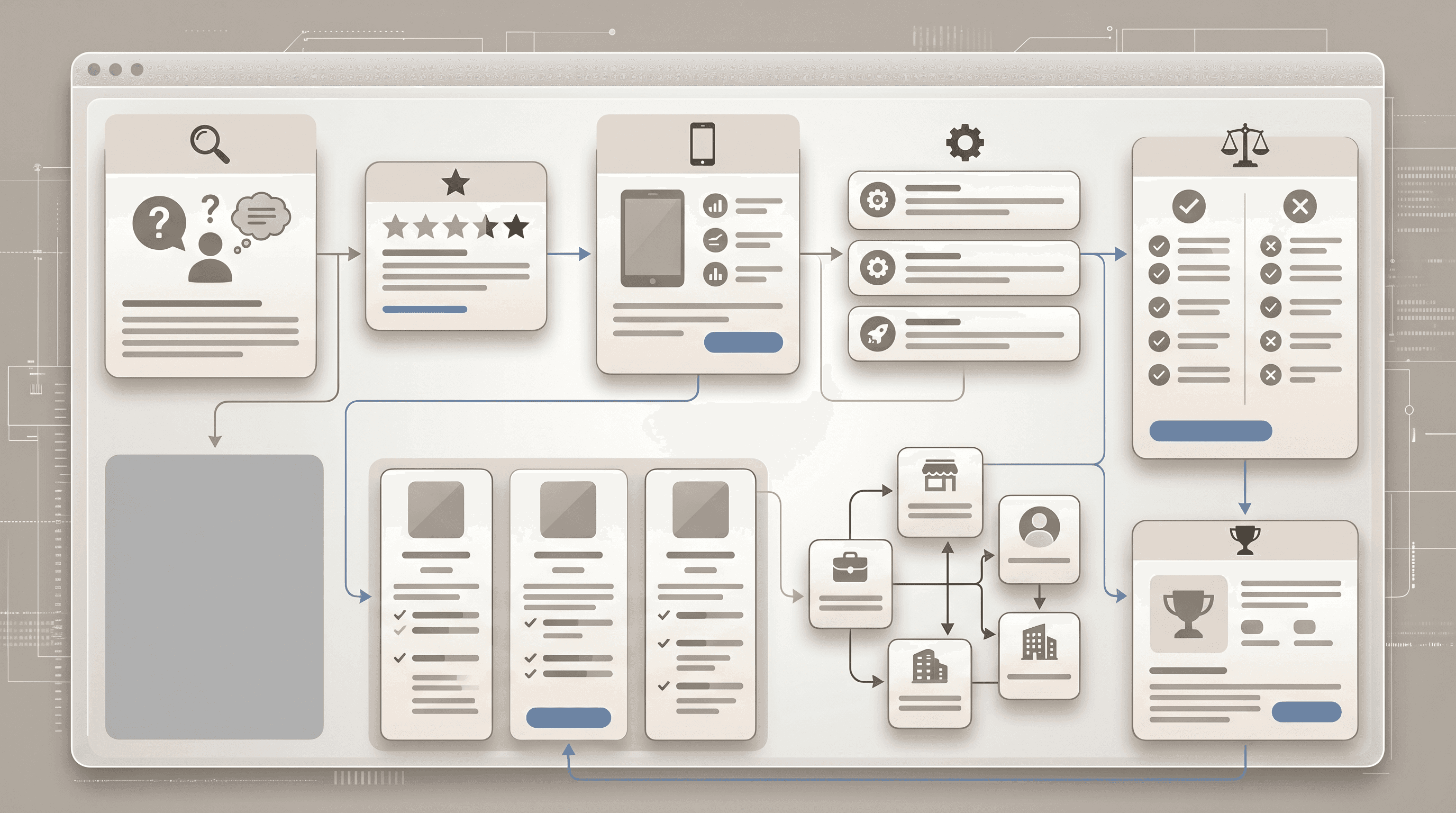
Define your niche.
Create your catalog.
Approve your sources.
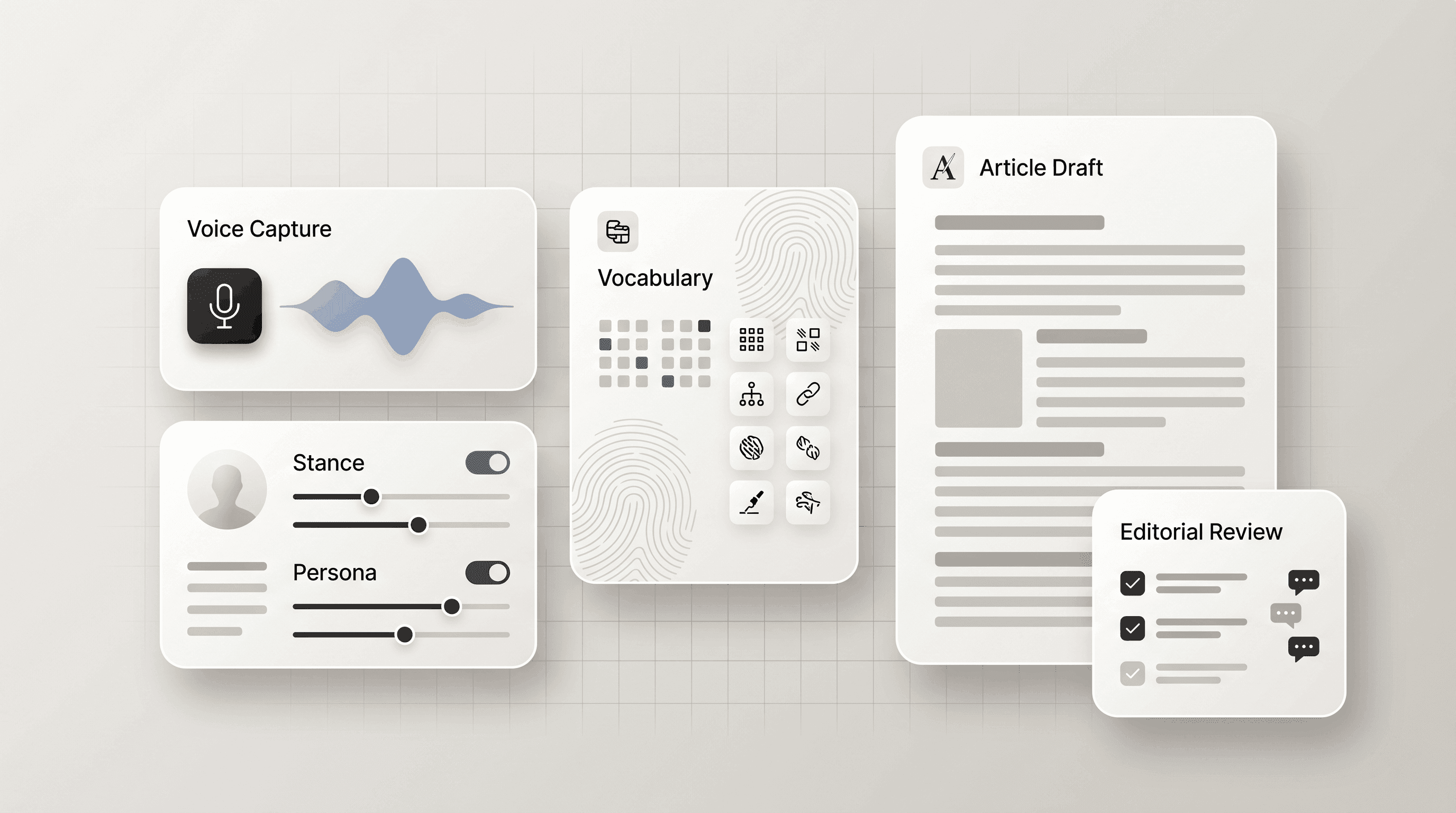
Set your editorial voice.
Generate article plans.
Review the draft.
Publish with structure.
Improve over time.
This is slower than pressing one magic button.
But it produces much better content.
And in the long run, it is faster because the system compounds.
Once your catalog is strong, every article can reuse that knowledge.
Once your voice is defined, every draft starts closer to your actual style.
Once your categories and pillars are clear, your content plan becomes easier to manage.
Once your sources are approved, your articles become safer and more consistent.
That is the kind of AI publishing workflow we believe in.
NichePressa Is Built for Publishers, Not Prompt Hackers
A lot of AI tools are built for people who enjoy writing prompts.
That is fine.
But most niche site owners do not want to become prompt engineers.
They want to build useful sites.
They want to publish better articles.
They want to manage recommendations.
They want to create content that can rank, convert, and serve readers.
NichePressa is built around that workflow.
Not just prompting.
Publishing.
The difference matters.
Prompting is one action.
Publishing is a system.
What We're Fixing
NichePressa is designed to fix the biggest problems with generic AI writing:
1. No More Blank-Prompt Guessing
The AI should not invent your site from scratch every time you create an article.
Your catalog, site settings, content pillars, and editorial identity should guide the output.
2. Better Source Control
Not every source deserves to become part of your site.
NichePressa is built around the idea that sources and catalog items should be reviewed, approved, excluded, or marked for review.
This keeps the publishing process cleaner.
3. More Consistent Recommendations
If your site recommends tools, products, games, or services, those recommendations need to stay consistent across articles.
A catalog makes that possible.
4. Stronger Content Planning
Good niche sites need more than random article ideas.
They need content that supports the whole site.
NichePressa helps turn your catalog and editorial direction into article plans that make sense together.
5. Human Approval Before Publishing
AI should help you move faster.
It should not replace editorial control.
The goal is not fully automatic spam publishing.
The goal is assisted publishing with human judgment still in the loop.
AI Content Is Not the Enemy
To be clear, AI content is not the problem.
Bad systems are the problem.
AI can be incredibly useful for niche publishing.
It can help you:
- Draft faster
- Create outlines
- Compare catalog items
- Build article plans
- Rewrite sections
- Improve structure
- Generate metadata
- Suggest internal links
- Keep content moving
But AI needs boundaries.
It needs context.
It needs approved data.
It needs a workflow.
Without that, it becomes a very fast machine for creating very average content.
The Future Is Not More Generic Articles
The future of niche publishing is not:
More AI articles.
It is:
Better AI-assisted publishing systems.
That means systems that understand your niche, your catalog, your voice, your recommendations, and your content strategy.
That is what NichePressa is working toward.
We do not want to help publishers create more empty articles.
We want to help them create better niche sites.
Sites with structure.
Sites with memory.
Sites with real recommendations.
Sites that feel useful.
Because the internet does not need another generic article that starts with:
"In today's fast-paced world..."
It needs content that actually helps someone make a better decision.
That is the difference.
And that is what we are building.